Simulation engineering portfolio
One turbine vane, the whole CAX chain
CFD, CAD, meshing, FEA (thermal, static, modal), CAM, data delivery to machine learning and containerised, differentiable solver components, built around one public benchmark: the VKI LS-89 high-pressure nozzle guide vane. Every step is automated in Python, checked against something independent, and runs on a laptop CPU.
Ignacio Fuerte Carrasco · CFD engineer, aero-thermal · Madrid
Small repositories that hand data to each other through plain files and typed component interfaces. Each one answers one question and can be read, tested and run on its own.
The repositories
What it demonstrates
| Capability | Evidence | Where |
|---|---|---|
| Efficient CAD / CFD / CAM simulations with configurable models, mesh requirements and multiphysics set-ups | Parametric blade family and cooling layouts; mesh presets with convergence studies (GCI); aerodynamic, aero-thermal and thermo-mechanical set-ups; CFD → FEA coupling with a 1D coolant model | TurboAI vane-thermomech |
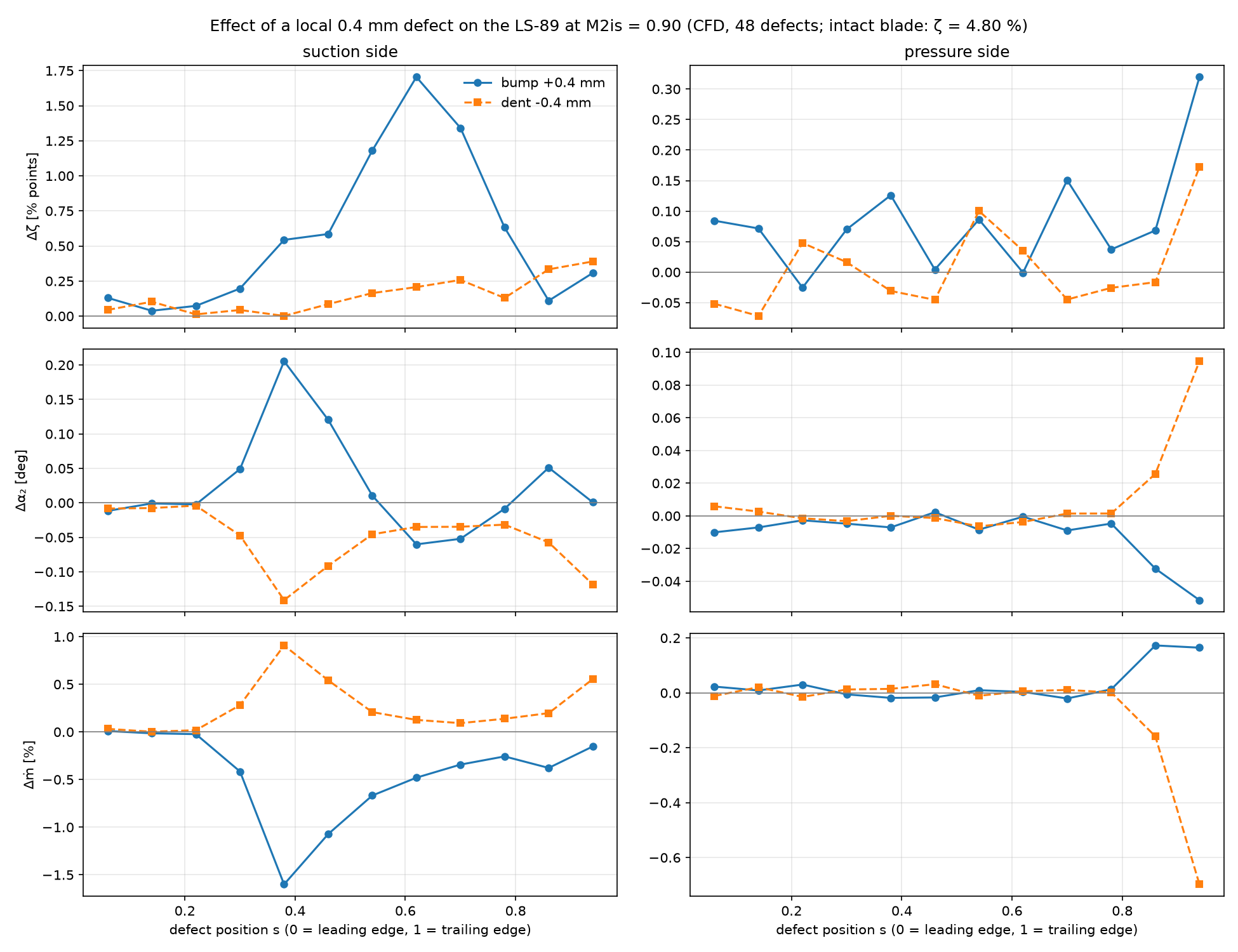
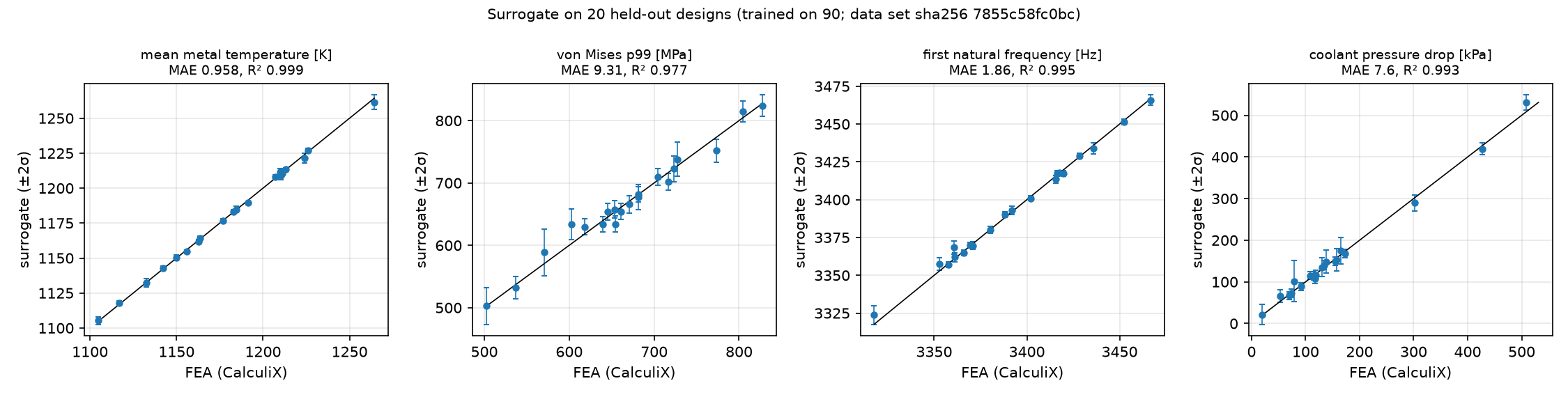
| Simulations delivered to machine-learning teams, and their feedback used | 513 audited CFD runs and a 110-design FEA sweep as HDF5 with a data card, fixed splits and a SHA-256 the models record; surrogate errors traced back to remeshing noise and convergence criteria | turboai-surrogates vane-thermomech |
| Python libraries that automate legacy solvers; deployment on cloud (VM, Docker) and on-prem | Drivers for OpenFOAM, gmsh and CalculiX (deck writers, runners, result parsers); three Docker images; the surrogate image built and published to ghcr.io by GitHub Actions; CI with an OpenFOAM job in the official container | cax-components TurboAI |
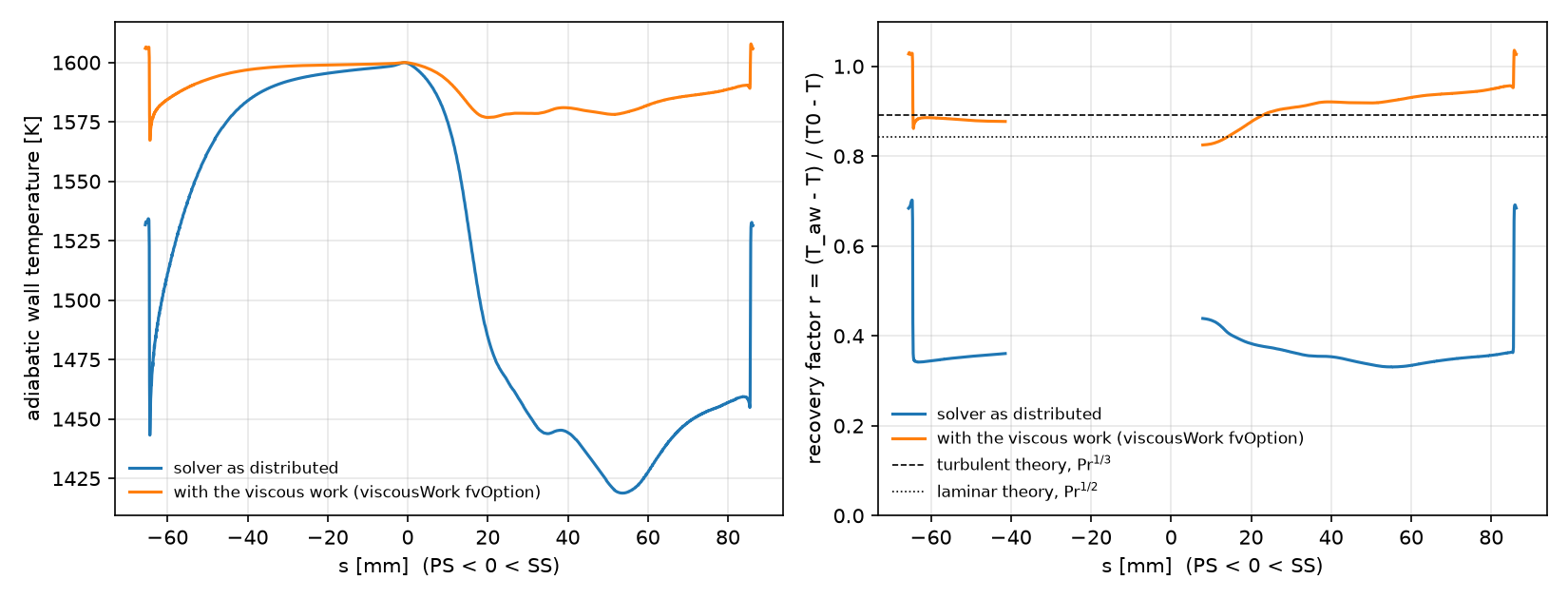
| Extending a solver | Viscous heating added to the rhoSimpleFoam energy equation with a compiled fvOption, needed for wall temperatures: recovery factor 0.35 → 0.884 (theory 0.892) | openfoam-viscous-work |
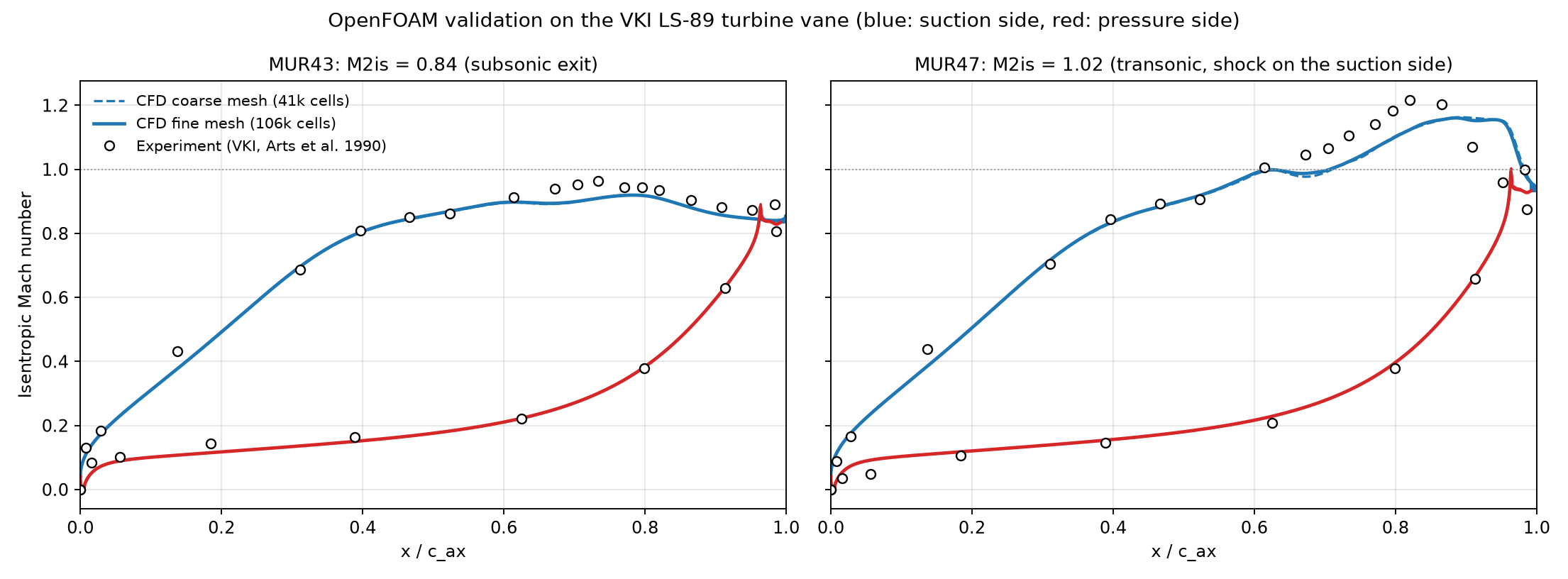
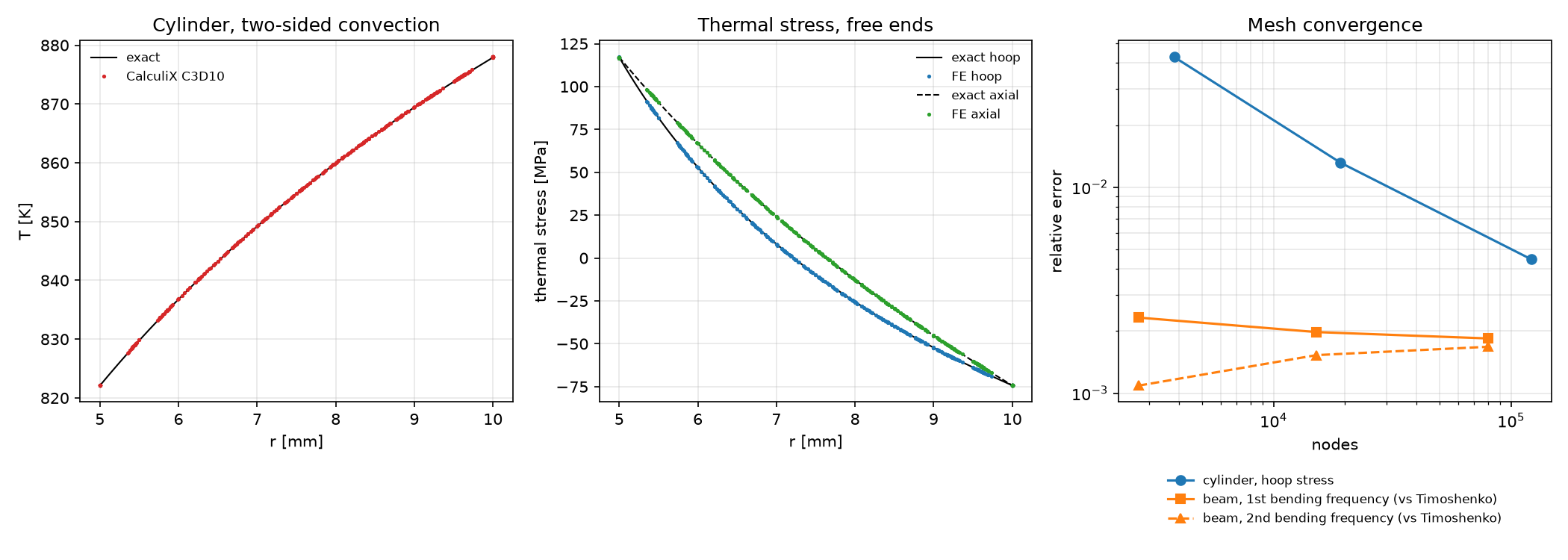
| Fidelity and performance of the solvers | Validation against wind-tunnel data; closed-form FEA benchmarks (0.45 %, 0.2 %); iterative-error, remeshing-noise and mesh studies; container results equal to host results | TurboAI vane-thermomech |
| CFD, static, modal and thermal analyses | Compressible RANS; conduction with temperature-dependent properties; thermal and pressure stress; hot natural frequencies and an interference diagram | TurboAI vane-thermomech |
| Interoperability across CFD and CAD tools in larger frameworks | OpenFOAM → arrays → CadQuery STEP → gmsh → CalculiX → HDF5 → JAX; solvers as schema-checked Tesseract components; an MCP tool server for LLM agents | cax-components turboai-agent |
| Demo materials and apps that show the value of Physics-AI in engineering workflows | Live in-browser surrogate demo; gradient-based design through a differentiable component, verified by the FEA container; animations | live demo cax-components |
| Regimented, reliable engineering processes | Resumable parallel campaigns with per-case failure capture, input validation before any solve, tests + lint + CI in every repository, versioned data | all repositories |
01 · TurboAI family
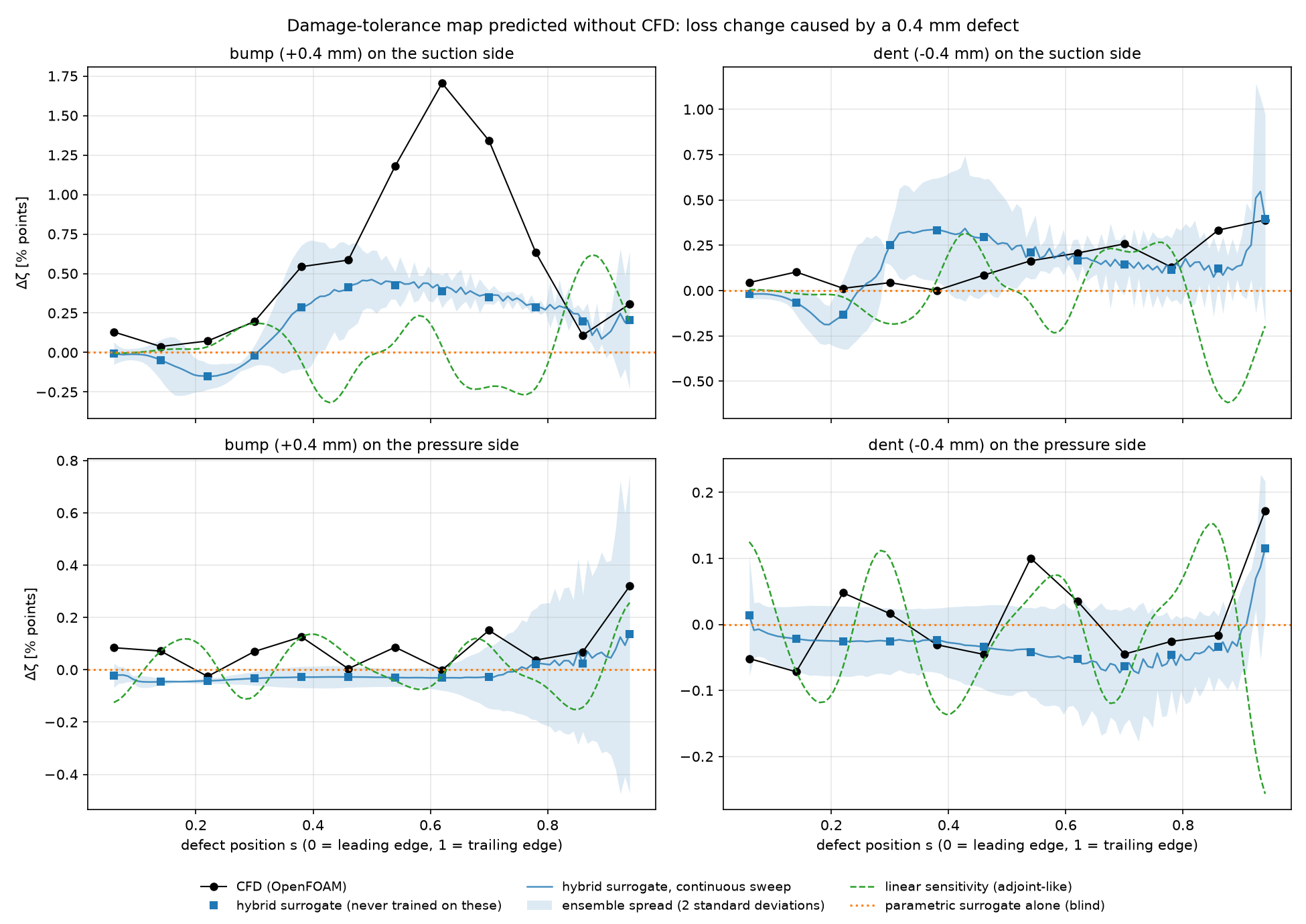
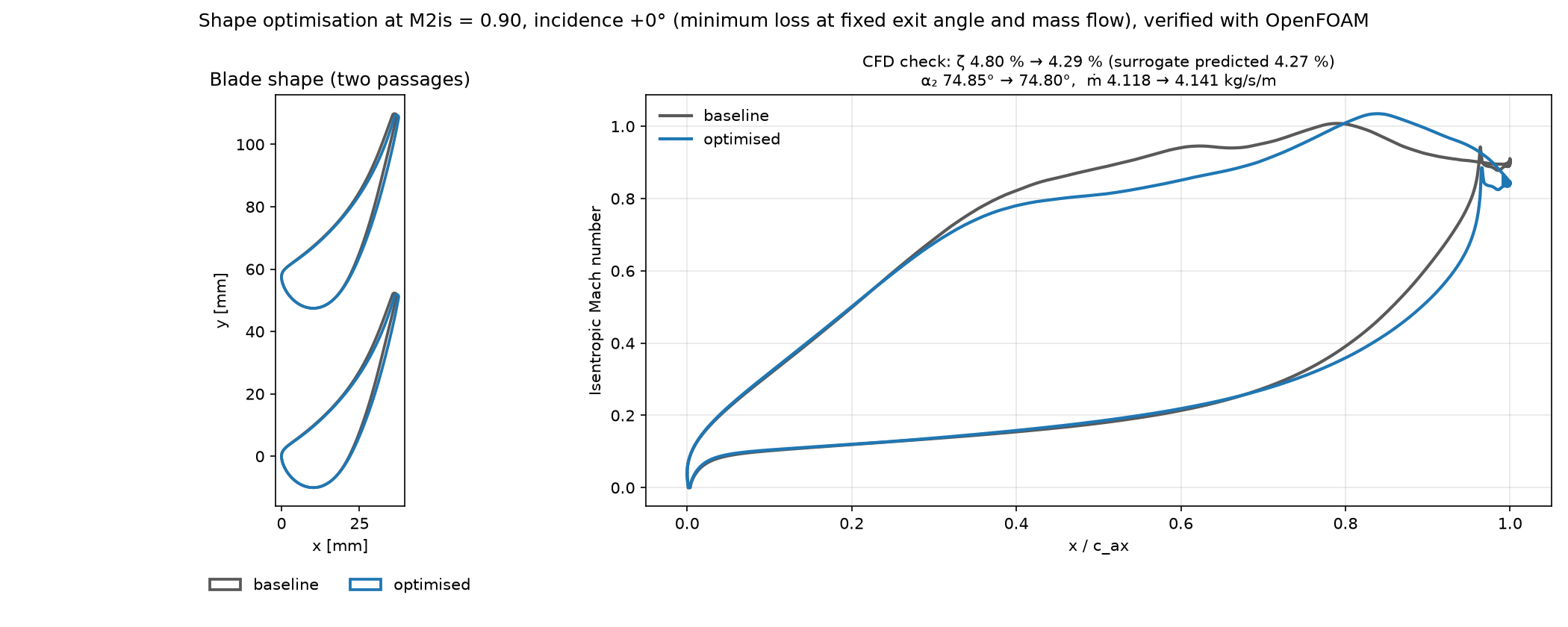
Validated CFD of a transonic turbine vane, and what it feeds
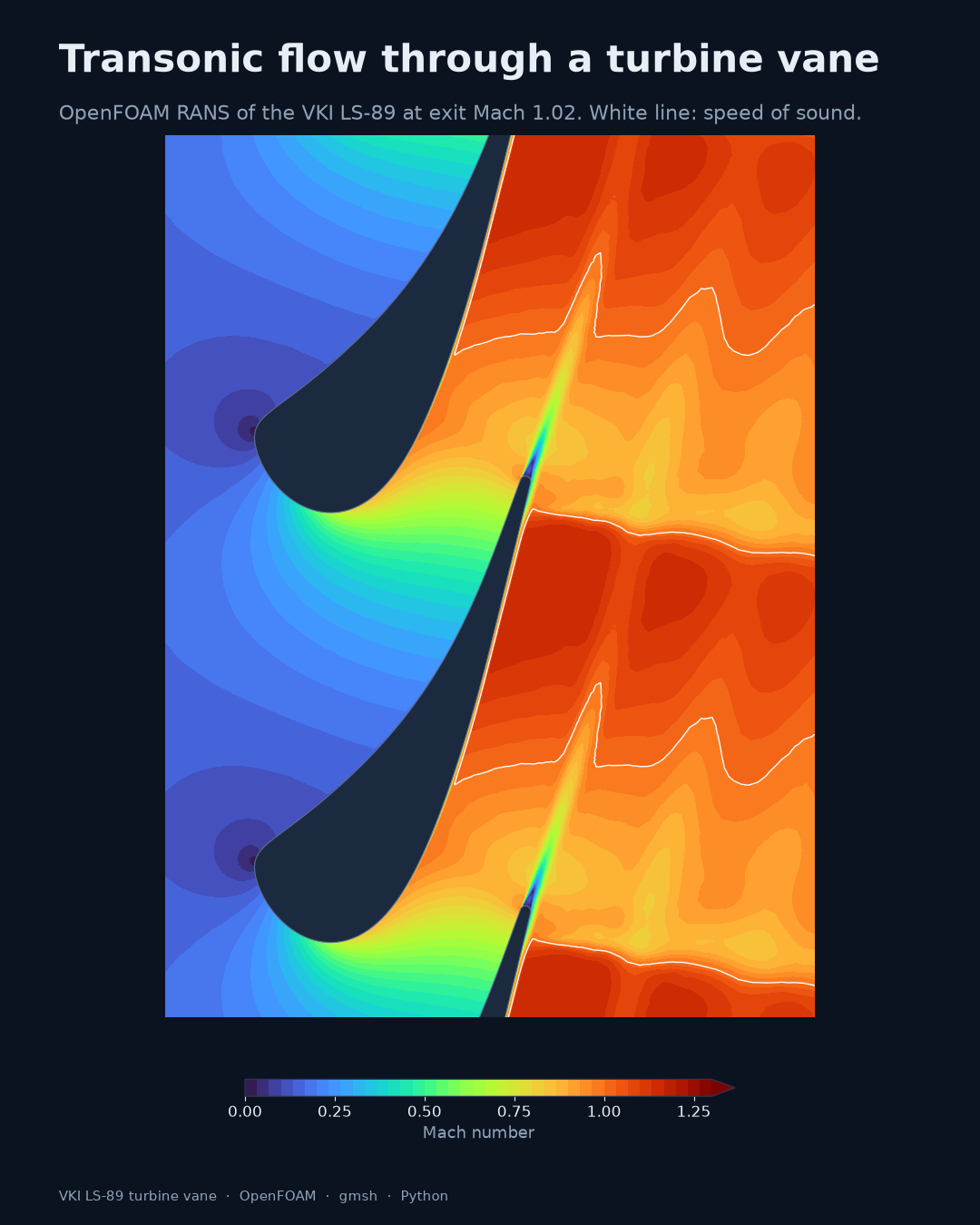
A periodic gmsh mesher with a y⁺ ≈ 1 boundary layer, OpenFOAM case templates driven from Python and resumable campaigns produce the data; Gaussian processes, POD, MLP ensembles and a PhysicsNeMo MeshGraphNet learn it. Designs proposed by a surrogate are re-run in CFD before any claim is made.
02 · vane-thermomech
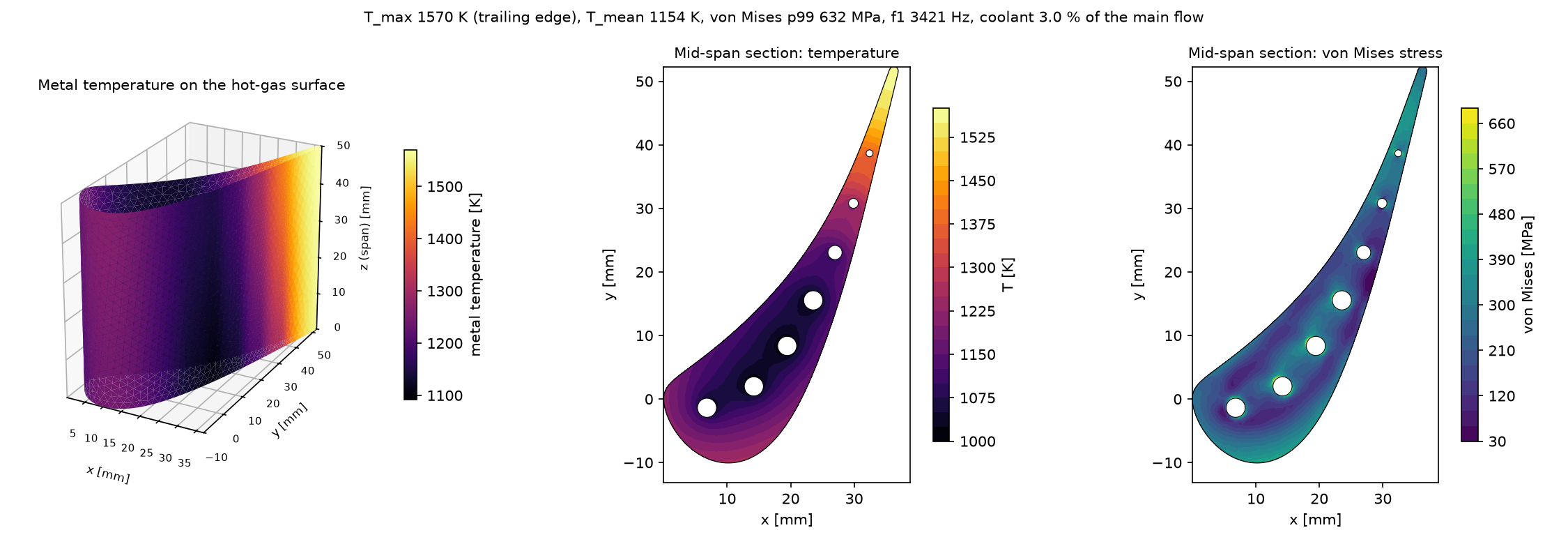
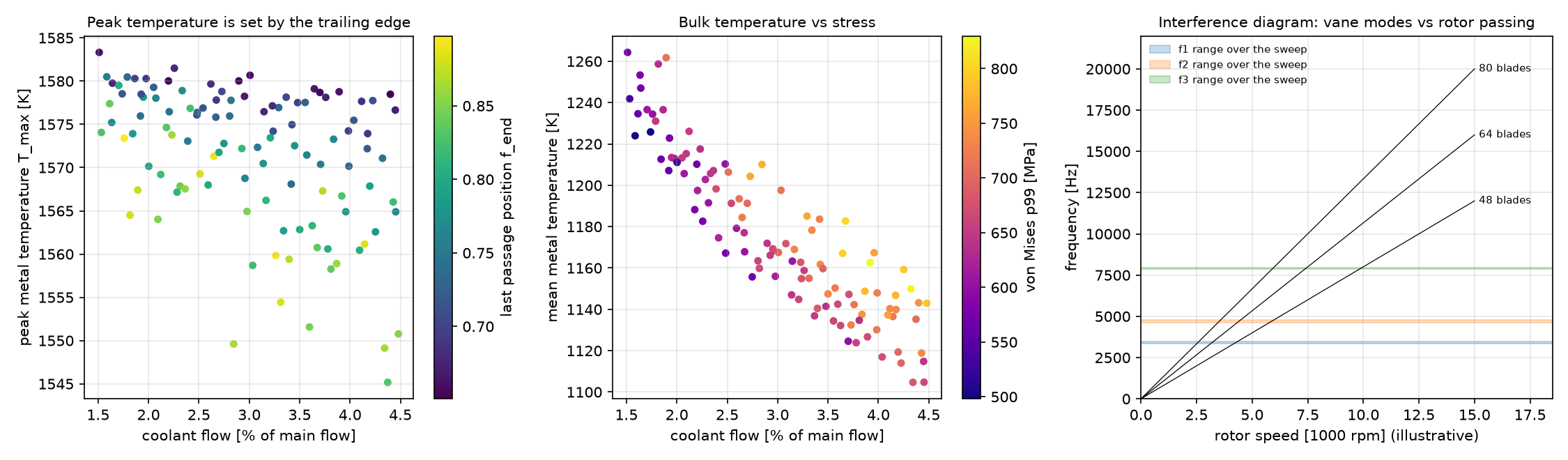
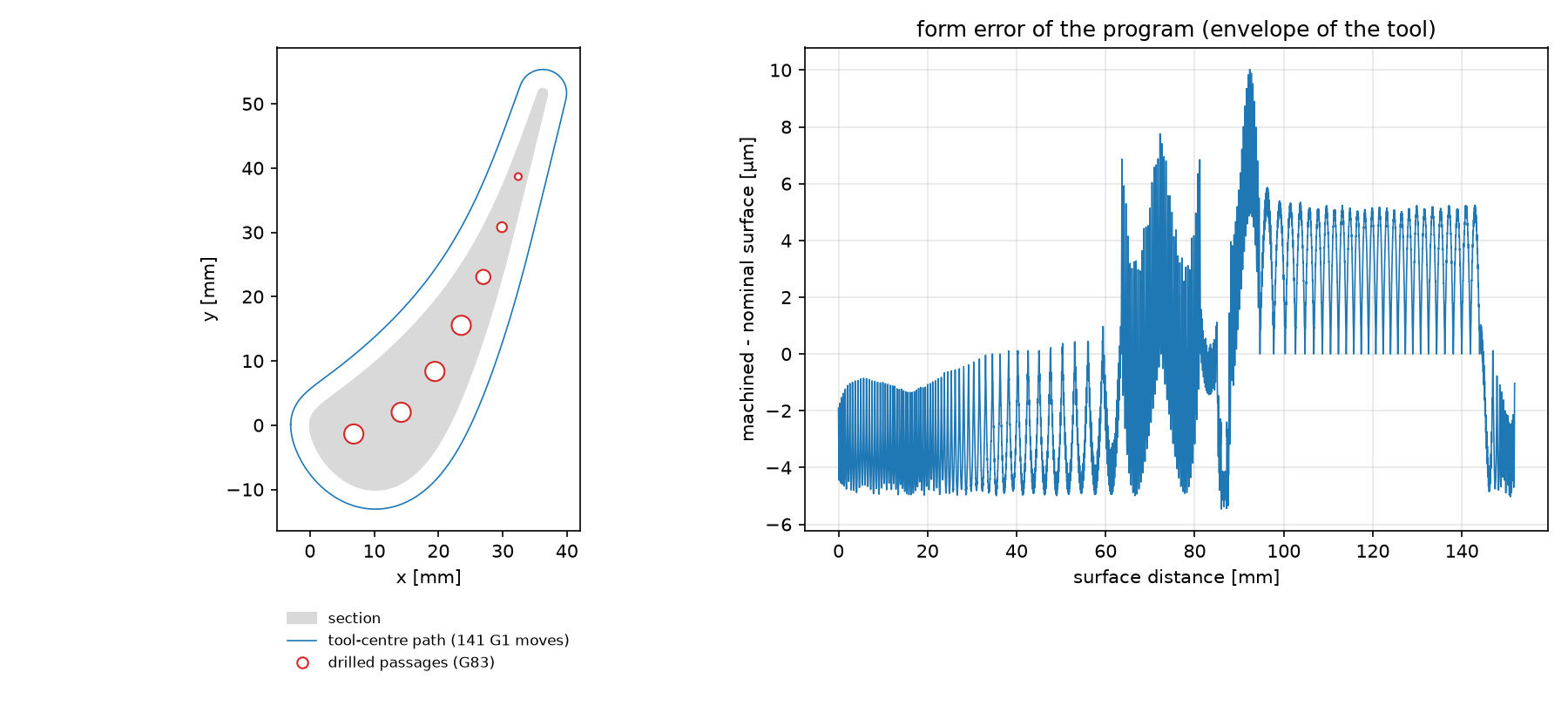
From the CFD table to CAD, FEA and CAM of the cooled vane
03 · cax-components
The solvers as Tesseract components: containerised, typed, differentiable where it pays
OpenFOAM, CalculiX and a JAX Gaussian-process surrogate are packaged with tesseract-core. Pipelines exchange arrays only, so a component can move between a laptop, a cloud VM and an HPC node without code changes.
- CFD → FEA across containers. OpenFOAM runs the cascade at 10 bar and 1600 K inside one container and hands its hot-gas table, as arrays, to the CalculiX container: mean metal temperature 1153.5 K, against 1153.6 K with the table computed outside Docker, in 11 minutes end to end.
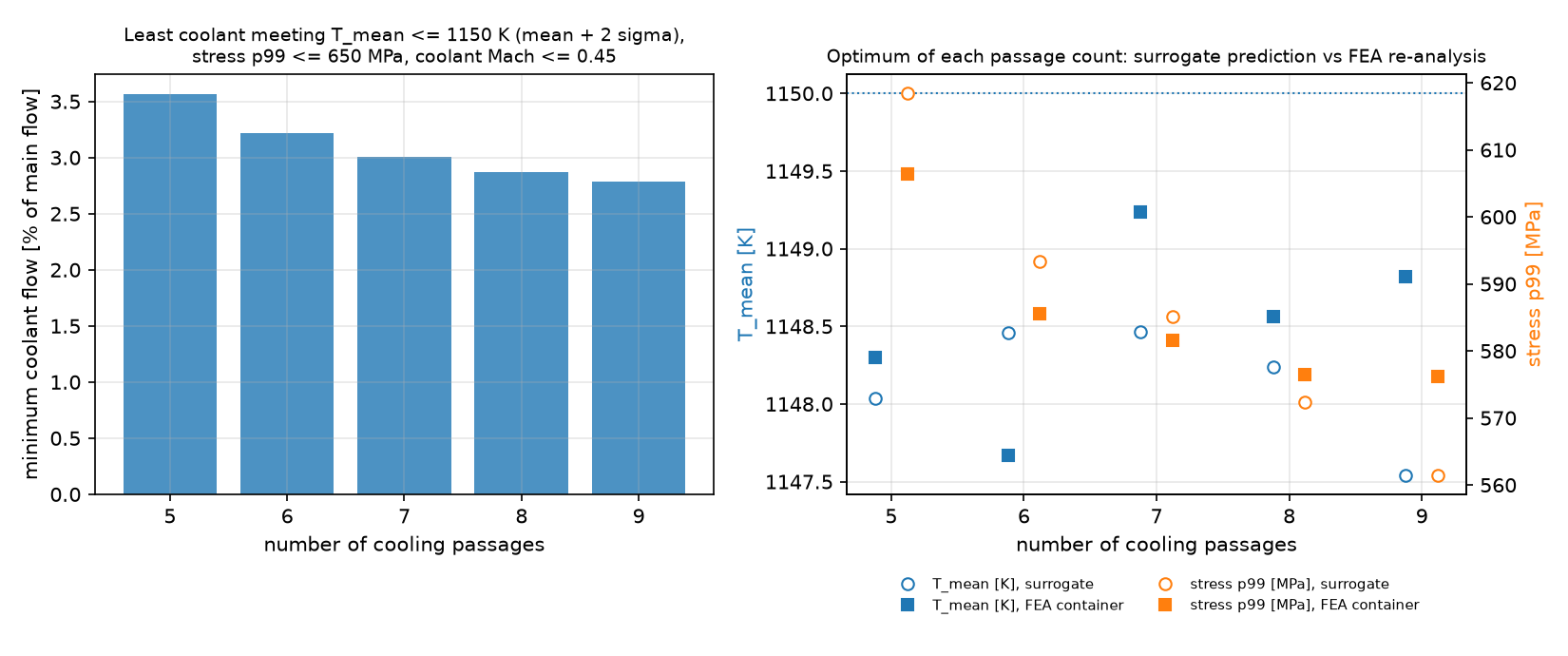
- Gradient-based design. SLSQP minimises the coolant flow with exact gradients through the surrogate component (
jax.gradthrough its VJP endpoint) under temperature (mean + 2σ), stress, coolant-Mach and manufacturing limits. From 5 to 9 passages the required coolant falls from 3.56 % to 2.79 % of the main flow; every optimum was re-analysed by the FEA container and met the 1150 K limit, within 1.3 K of the prediction. - Gradient check. Automatic differentiation through the component matches finite differences.
- Published image. GitHub Actions builds the surrogate component on a cloud runner, checks it and pushes it to the GitHub Container Registry:
docker pull ghcr.io/ignaciofuertecarrasco/vane-surrogate.
Things I learned along the way
Run it
Each repository has a README with the reproduction commands, a pytest suite and a CI workflow.
OpenFOAM and CalculiX run natively on Ubuntu or WSL2, or inside the component images:
bash scripts/build.sh, then tesseract run vane-fea apply '{"inputs": {}}'.